Kissy Hugs Font Review: A Playful Display Typeface for Warm Branding
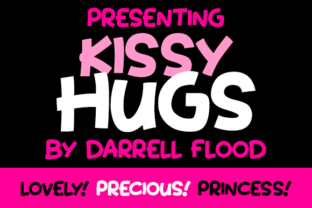
It was a quiet morning, the kind where your brand board feels like a blank canvas waiting to be filled with color and character. I had just opened a fresh project for a local bakery looking to refresh its identity—something playful yet trustworthy. As I scrolled through font options, Kissy Hugs caught my eye. Created by Darrell Flood, it promised a fun, cartoony vibe with a heartwarming touch. I decided to give it a test run on the logo concept.
A Font with Personality
Kissy Hugs is exactly what it sounds like—a display font bursting with charm and whimsy. The rounded forms, exaggerated curves, and soft serifs give it a friendly, approachable feel that’s perfect for brands aiming to evoke warmth and joy. It’s not just a font; it's an emotional statement. The visual characteristics are reminiscent of classic cartoon lettering, but with a modern twist that makes it feel fresh and relevant today.
Testing it on a logo draft for the bakery, I found that it brought a sense of playfulness that matched the brand’s personality. It worked well as a primary typeface for the main logo, especially when paired with a clean sans serif for secondary text. The contrast helped establish visual hierarchy without making the design feel cluttered.
Performance in Real Branding Projects
I tested Kissy Hugs across several branding elements: a packaging mockup, business card design, website header, and social media layout. On the packaging mockup, it looked great on a label for a new line of pastries. The soft curves felt inviting, and the overall look aligned with the bakery’s goal of being a cozy, community-focused space.
On the business cards, it worked well as a headline font. The size and spacing were easy to read even at smaller dimensions, though I did notice that it lost some of its charm when used in long paragraphs. That said, it’s clearly designed more for short phrases or headlines rather than body text.
The website header using Kissy Hugs added a warm, welcoming tone to the homepage. It complemented the hero image of a freshly baked loaf perfectly. For social media posts, the font made the captions feel more personal and engaging, especially when paired with illustrations or photos of the bakery’s products.
Where Kissy Hugs Shines Best
Kissy Hugs excels as a display font, headline font, or accent font in branding projects that prioritize emotion and character. It’s ideal for logos, packaging labels, product names, Instagram captions, and creative studio identities. Its playful nature makes it a great fit for cafes, bakeries, handmade shops, children’s brands, or any project that needs a touch of warmth and personality.
However, it’s not the best choice for long-form content, formal corporate use, or anything requiring strict readability at small sizes. If you’re designing a brochure or a website with extensive body text, consider pairing it with a more legible sans serif or serif font for the supporting text.
Font Pairing and Practical Tips
When pairing Kissy Hugs, I found that it works beautifully with a clean sans serif like Montserrat or Helvetica Neue for balance. The contrast between the playful curves of Kissy Hugs and the sharp edges of a sans serif adds depth to the design while maintaining clarity.
For a more whimsical look, try combining it with a script font like Great Vibes or Pacifico. Just be careful not to overdo it—too many decorative fonts can make a design feel chaotic.
Before using Kissy Hugs in final client work, always test it across different mediums: print, web, mobile, and social platforms. Check how it looks in various sizes and colors. Also, ensure that you have the correct commercial license for your intended use. Fonts like Kissy Hugs are often available for personal use only, so verifying licensing terms is crucial if you're using it for brand identity, packaging, templates, or print-on-demand products.
If you’re considering this font for a project, start with a few mockups and see how it interacts with your brand’s visuals. A little experimentation goes a long way in finding the right fit.